The short answer is that a moisturizer adds water to your skin and a face oil seals water in. They overlap far more than the beauty aisle suggests, and for most people a good face oil pressed into damp skin quietly does both jobs. Whether you need the second product comes down to how dry your air is.
What does a moisturizer actually do?
A classic cream is an emulsion. Water, humectants that bind that water to the surface of your skin such as glycerin or hyaluronic acid, and some oil or wax to slow evaporation. It hydrates and lightly seals in one step, which is why it has been the default recommendation for about forty years.
That default is worth questioning, because the sealing half of the job is the part most creams do least well. A cream that is mostly water has to use a small amount of oil or wax to hold the rest of itself in place.
What does a face oil actually do?
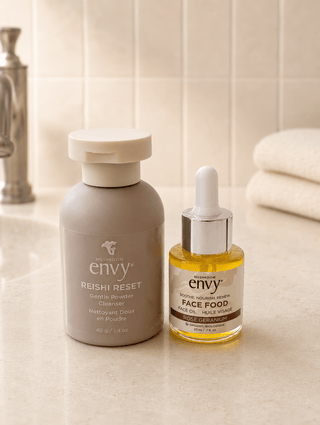
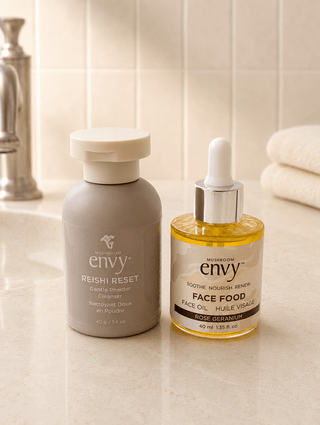
A face oil skips the water phase entirely and concentrates on the other half. Fatty acids and antioxidants, plus an occlusive layer that slows how quickly water leaves the surface. Our Organic Face Food is built on rosehip, calendula and cranberry seed oils, and infused with reishi and shiitake extracts whose beta glucans carry some of the water binding character you would normally look to a cream for.
We source those mushrooms from Purica, which is in Duncan, BC, about an hour up the island from us. That proximity is most of the reason the formula exists in the shape it does. The rest of the story is on our founding story page.
Why does damp skin change the answer?
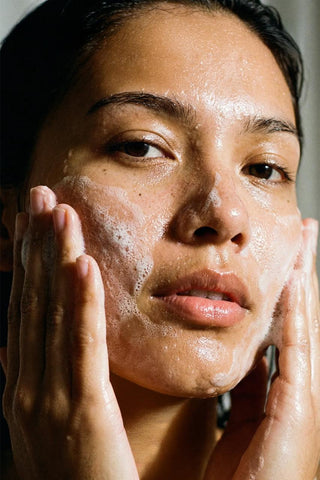
Oil cannot add water. It can only hold onto water that is already there. Apply your face oil within a minute of cleansing, while your skin is still slightly damp, and you are sealing in real hydration rather than coating a dry surface.
This single habit is the difference between the people who say a face oil replaced their moisturizer and the people who say oils never worked for them. It is not usually the oil. It is the ninety seconds after the tap goes off.
What do our own customers actually do?
We went and counted, because we would rather answer this with our own numbers than with a guess.
Across our first one hundred published reviews, twelve mention a moisturizer at all. Four of those describe Face Food replacing theirs outright. Four describe using both, oil layered over or under a cream they already owned. The rest mention moisturizing as a feeling rather than a product.
One review reads simply, "Envy replaces all the moisturizers in my vanity." Another, from a customer who bought Face Food at the James Bay Market and used it twice daily for a fortnight, describes applying it three ways over that stretch: on its own, under sunscreen, and under a night cream. A third says it is "moisturizing enough that it's all I put on before my sunscreen and makeup."
That is a small sample and we are not going to pretend otherwise. Twelve people is twelve people. But the split is close to even, and it matches what we hear standing behind a table at a market: roughly half of people can drop the cream, and roughly half like having both.
So do you actually need both?
Here is the position we will defend, even though it is the worse answer for us commercially. Most people do not need both. Selling you one bottle instead of two is not in our interest, and we are saying it anyway, because the alternative is watching people buy a cream they will use twice.
- Oil alone is usually enough if your skin is normal, combination or oily, you apply it to damp skin, and your air is not brutally dry.
- Use both if your skin runs very dry, you live with hard winters or constant indoor heating, or you already love a hyaluronic serum. In that case layer water first and oil last.
- Either way the oil goes last, before sunscreen in the morning. Nothing water based gets through an oil layer, so the order matters more than the products do.
The honest failure case for oil only is a Prairie January. If you are somewhere that sits at minus twenty with the furnace running, a humectant layer underneath is doing work that no oil can do on its own.
What does our own routine look like?
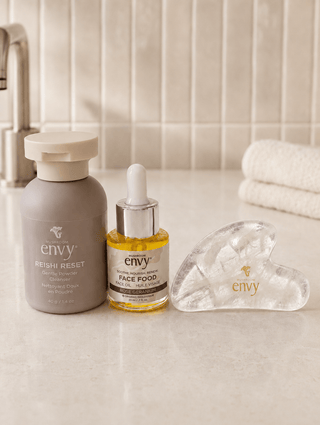
- Cleanse with Reishi Reset powder cleanser, which is gentle enough that skin stays comfortable rather than tight.
- Leave the skin damp, then press in three or four drops of Face Food. Use the unscented version if your skin reacts to essential oils.
- Optional, and genuinely optional: two minutes of gua sha to work the oil in. The technique guide is here, including what the research does and does not support.
That is two steps and an optional third. If you want to find out whether an oil can carry your routine without committing to a full bottle, the nine dollar Face Food Mini is the cheapest way to answer the question on your own face.
Frequently asked questions
Can a face oil replace moisturizer?
Often, yes, if you apply it to damp skin so there is water to seal in. Very dry skin types may still want a hydrating layer underneath.
Will face oil clog pores?
It depends on the oil. Rosehip and cranberry seed oils are lightweight and low on the comedogenic scale, which is why they are the base of Face Food. Heavier oils such as coconut are more likely to clog.
Does oil or moisturizer go on first?
Oil goes last. Water based products cannot get through an oil layer, so the order is cleanse, then water based layers, then oil.
How many drops of face oil should I use?
Three to four drops is plenty for the whole face. Warm them between your palms and press into damp skin rather than rubbing.