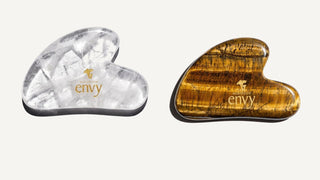
Choosing a gua sha stone comes down to two things: the shape of the tool and the material it’s carved from. Here’s the honest answer up front: our white quartz and tiger eye stones share the same smooth wing shape, so they glide the same way on your skin. The choice is about look, feel, and which one you’ll actually reach for at the end of the day.
What is a gua sha stone for?
A gua sha stone is a smooth edged tool that glides over oiled skin with light pressure. It’s one of the oldest tools in traditional Chinese skincare, and one of the simplest: two to three minutes, a few slow strokes, done. Most people use it to unwind at night or to wake up the face in the morning, when skin can look a little puffy and the slow strokes leave it looking smoother and more awake.
New to the technique? Start with our step by step guide, which includes a short video: How to use a gua sha stone: proper technique for beginners.
Are white quartz and tiger eye different minerals?
Here is the part most shops skip: not really. Both are quartz. White quartz is crystalline quartz, silicon dioxide, the same mineral as clear rock crystal. Tiger eye is quartz too. It formed when quartz slowly replaced fibres of a blue mineral called crocidolite inside the rock, keeping their shape. Iron in those fibres oxidised to gold and brown, and the fibres catch the light in bands. That shifting shine has a name, chatoyancy, from the French for a cat’s eye.
So the two stones sit at about the same hardness, around 7 on the Mohs scale, harder than steel, and they weigh almost exactly the same for their size. That is why they glide the same way. What you are choosing between is the look.
Does the stone material matter?
Less than you’d think. Your technique and your consistency matter far more than the mineral in your hand. Any well carved, smooth stone, whether quartz, jade or tiger eye, glides the same way. Where materials really differ is how they look, and how carefully they were cut and polished. A rough edge matters more than the mineral.
Why does a gua sha stone feel cold?
Quartz is not actually colder than the room. It conducts heat far better than your skin does, so when you touch it, it draws warmth away quickly and your skin reads that as cold. It is the same reason a marble counter feels colder than a wooden table in the same kitchen. Both of our stones are quartz, so both start cool, and both slowly warm to your skin as you work.
That is also why the fridge trick works. Some people keep their stone in the fridge for an extra cool morning massage, and quartz holds that chill well.
What is white quartz like to use?
White quartz is clear to milky white, with a clean, minimal look. In crystal tradition it’s associated with clarity. If your ritual is about winding down and you like things simple on the shelf, the white quartz stone is the classic choice.
What is tiger eye like to use?
Tiger eye is the striking one: banded amber and gold, no two stones alike, and the bands shift as you turn it in the light. It carries the same smooth edge and the same technique, with a warmer, earthier look in hand. In crystal tradition it’s associated with grounding and confidence. If you want your gua sha to feel like an object you love picking up, the tiger eye stone is hard to beat.
How do you choose between them?
Pick the stone you’ll actually use. That sounds glib, but it’s the whole game: what you get from gua sha comes from repetition, not from the mineral. Choose clean and minimal (white quartz) or warm and characterful (tiger eye). Your skin gets the same massage either way. Both stones are priced the same, and both last for years with basic care.
Why should you never use a gua sha stone dry?
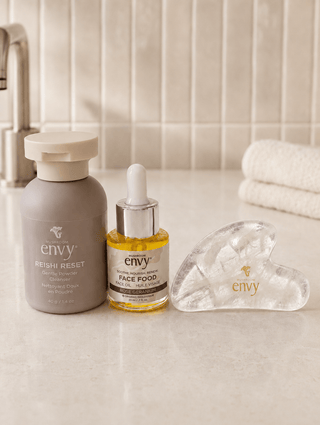
A gua sha stone should always glide, never drag. Dragging a stone across dry skin pulls at it, which is the opposite of what you want. Give the stone slip with a facial oil first. Our ritual, in order:
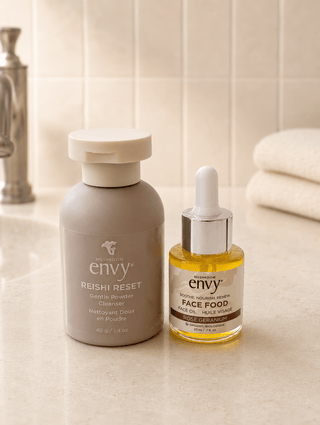
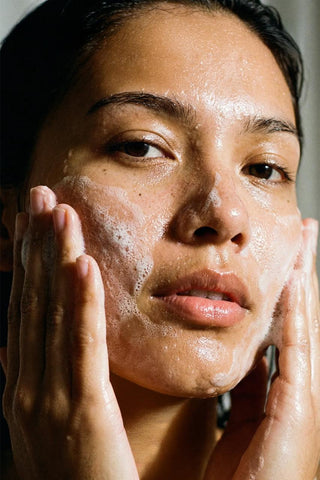
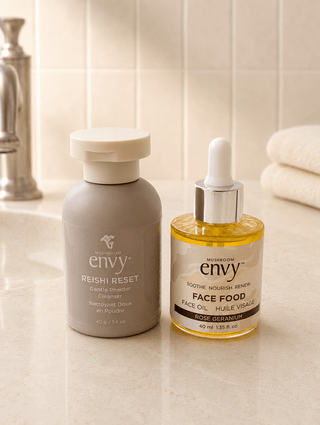
- Cleanse with Reishi Reset, our gentle mushroom powder cleanser.
- Press in a few drops of Organic Face Food (there’s an unscented version if you prefer no fragrance at all).
- Glide your gua sha, using light pressure, always upward and outward.
How do you care for a gua sha stone?
Wash it with warm water and a drop of gentle soap after use, dry it, and store it somewhere it won’t knock against hard objects. Quartz is hard, but hard is not the same as tough: it can chip or crack if dropped on tile. Tiger eye’s banding comes from fibres inside the stone, so a hard knock can open a crack along them.
We are a mother and son company in Victoria, BC, and you can read how Mushroom Envy began here.
Frequently asked questions
How often should I use a gua sha stone?
Start with once or twice a week and build up to daily if you enjoy it. A full facial routine takes two to three minutes, morning or night.
Can I use a gua sha stone without oil?
No. The stone needs slip to glide instead of drag. Press a few drops of facial oil into your skin first.
Is white quartz or tiger eye better for gua sha?
They perform the same, because both are quartz with the same hardness and weight. White quartz looks clean and minimal; tiger eye has warmer tones and shifting gold bands. Choose the one you’ll enjoy using every day.
Why does my gua sha stone feel cold?
Quartz conducts heat much better than skin, so it draws warmth away from your face and feels cool, even at room temperature. It warms up as you use it.
Can gua sha help my face look less puffy?
Many people reach for it in the morning for exactly that. Slow, light strokes, upward and outward, leave the face looking smoother and less puffy, especially around the eyes and jawline.